
ePM Assess™ 2.3
Professional Assessment of Project Management Skills
Align your skills with international project management standards. Assess where you stand today, find your gaps, and build a clear plan to grow.
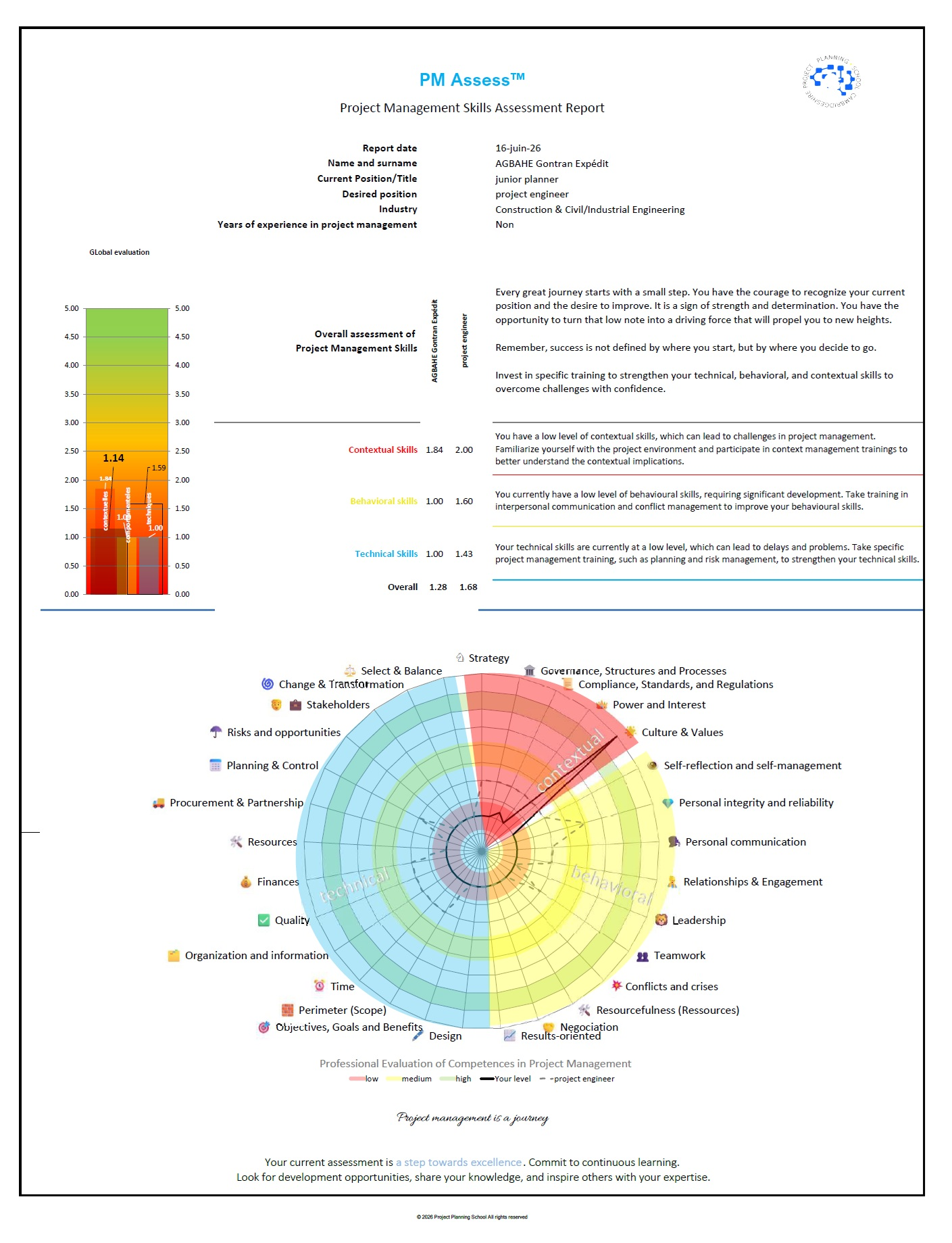
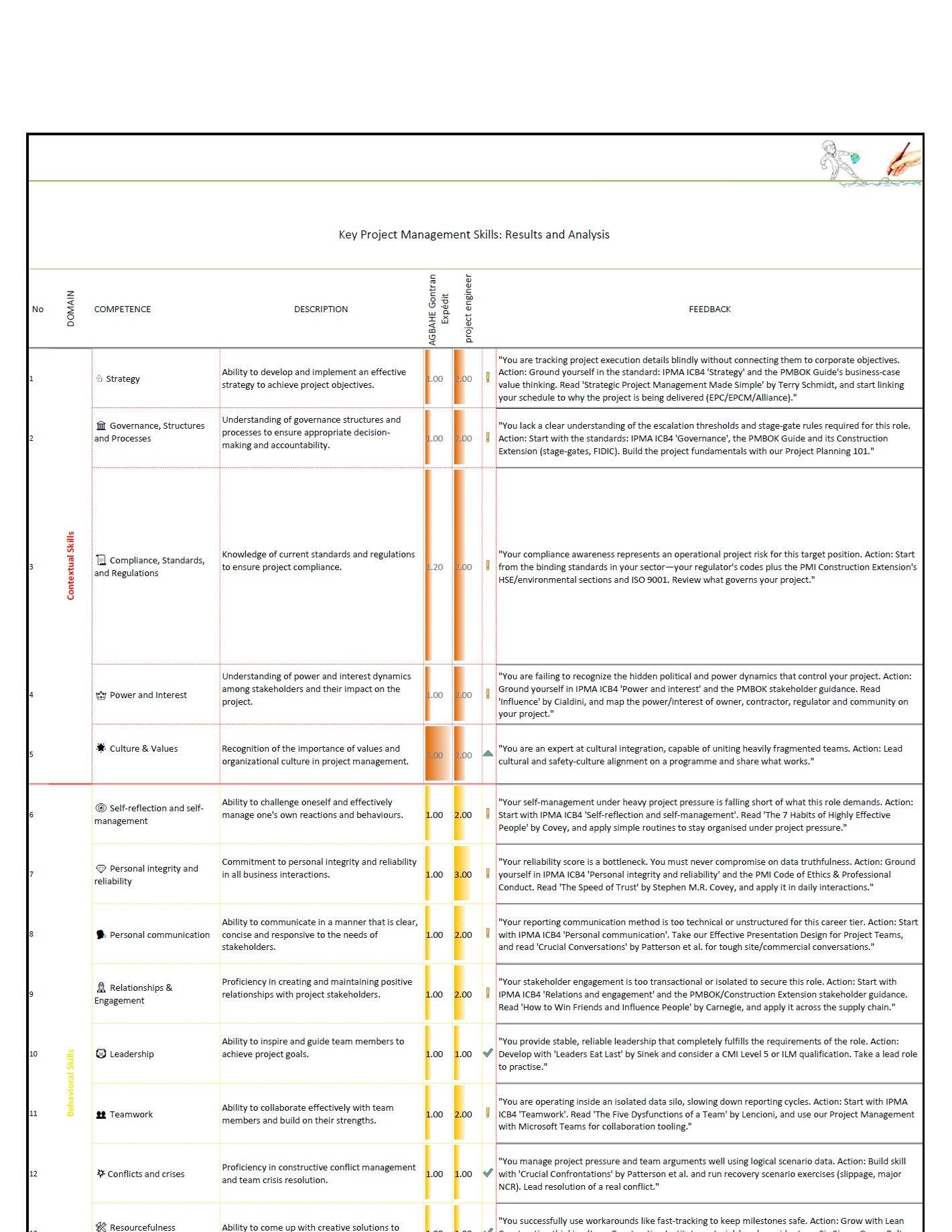
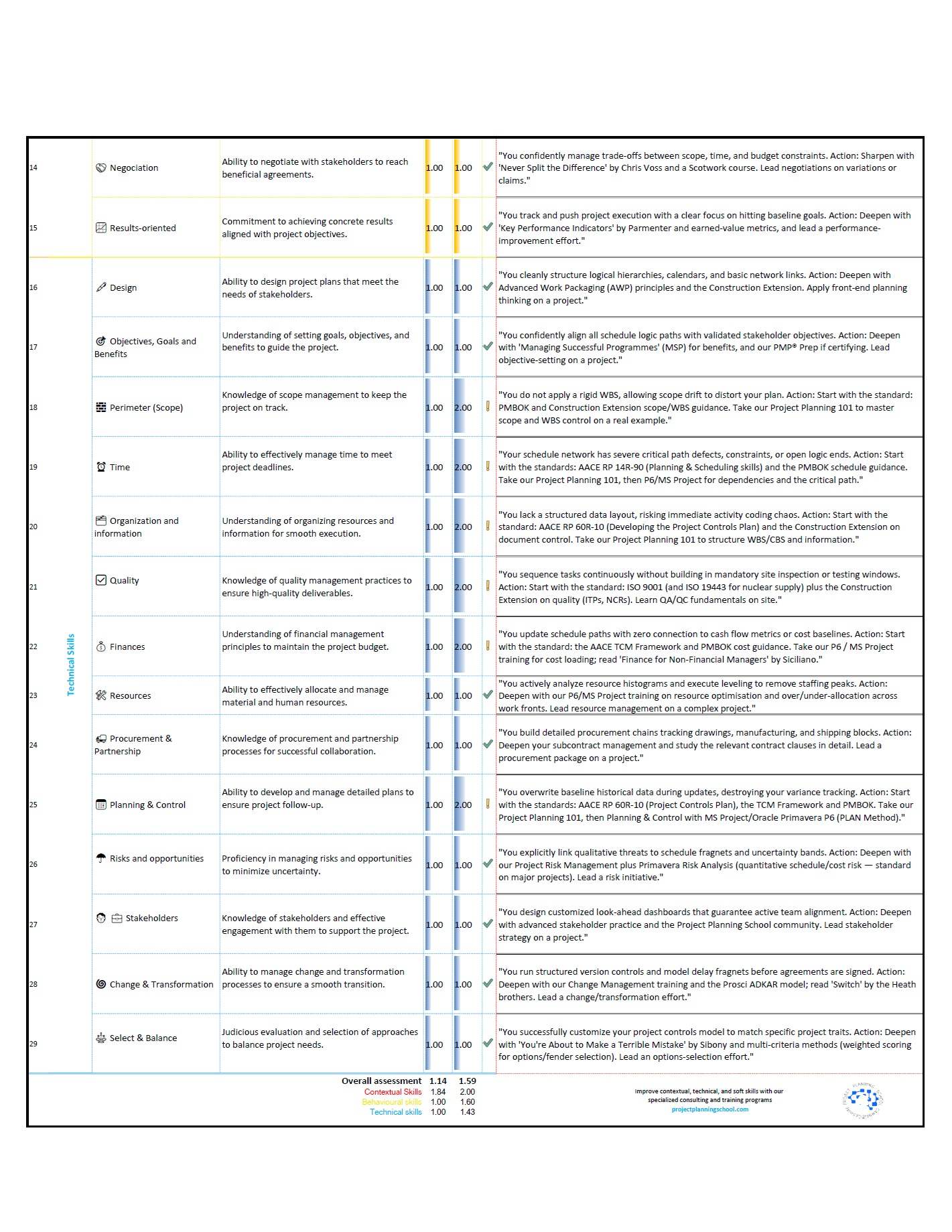
Watch: how to complete the assessment
A short walkthrough showing exactly how to take the assessment and how to read your results report.
More than just an assessment
Our tool draws its power from expertise in project management, cognitive psychology, the mechanisms of learning, and pedagogical engineering — the heart of our approach. Start by assessing your skills, dive into continuous learning, and see how you grow professionally.
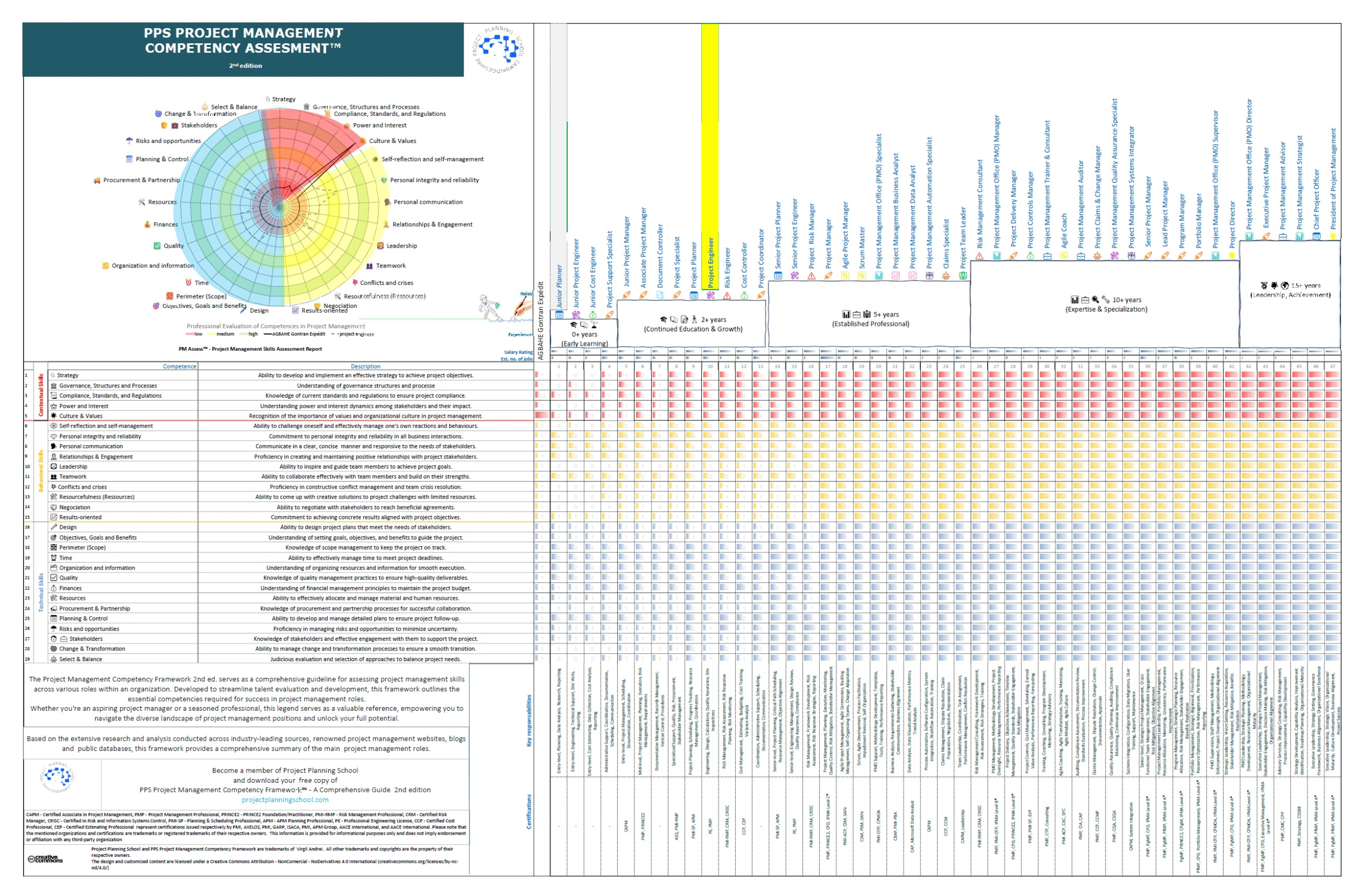
Explore three key areas of competence
29 meticulously structured project management competencies, across three dimensions.
🧠 Contextual
The skills specific to the environment and situation in which a project is carried out — strategy, governance, compliance, stakeholder power and interest, culture and values.
- ♘ Strategy: Develop strategic plans to steer your projects towards goals aligned with the overall vision.
- 🏛️ Governance, Structures and Processes: Understand how projects fit into organizational structures and processes.
- 📜 Compliance, Standards & Regulations: Master relevant standards and regulations to ensure project success and ethics.
- 👑 Power and Interest: Manage interactions with stakeholders based on their motivations and interests.
- 🌟 Culture & Values: Work effectively in diverse cultural contexts by embedding values to encourage collaboration.
🗣️ Behavioural
The social and emotional skills that help you work well — communication, leadership, teamwork, negotiation, conflict management, integrity and results orientation.
- 👁️ Self-Reflection and Self-Management: Objectively evaluate your actions and manage your own professional development.
- 💎 Personal Integrity and Trustworthiness: Cultivate integrity and trustworthiness to build trusting relationships.
- 🗣️ Personal Communication: Improve your communication skills to exchange information effectively.
- 👷 ♂️ Relationships & Engagement: Develop strong relationships with your teams and stakeholders for seamless collaboration.
- 🦁 Leadership: Guide and motivate your teams to achieve project goals.
- 👥 Teamwork: Enable productive collaboration by understanding the dynamics of teamwork.
- 💥 Conflicts and Crises: Manage conflicts and crises to maintain stability and project progress.
- 🛠️ Resourcefulness: Use resources effectively to solve problems and overcome obstacles.
- 🤝 Negotiation: Ability to negotiate with stakeholders to reach beneficial agreements.
- 📈 Results Orientation: Commitment to the achievement of concrete results aligned with project objectives.
🛠️ Technical
The technical skills specific to project management — scope, time, quality, finance, resources, procurement, planning and control, risk, and stakeholders.
- 🖋️ Design: Design solid projects by aligning milestones with end goals.
- 🎯 Objectives, Goals and Benefits: Clearly define the project’s objectives, goals, and benefits for success.
- 🧱 Scope : Manage project scope to avoid spillover and ambiguity.
- ⏰ Time: Effectively plan and manage time to meet deadlines.
- 🗂️ Organization and Information: Organize information and resources for structured execution.
- ✅ Quality: Ensure deliverables meet quality standards.
- 💰 Finance: Manage financial resources for cost-effective execution.
- 🛠️ Resources: Allocate and manage resources for optimal execution.
- 🚚 Procurement & Partnership: Build collaborative relationships for seamless execution.
- 📅 Planning & Control: Develop detailed plans and keep track of the project.
- ☂️ Risks and Opportunities: Anticipate and manage risks to minimize negative impacts.
- 🧑 💼 Stakeholders: Identify and manage stakeholders for project success.
- 🌀 Change and Transformation: Manage change to drive adaptation and innovation.
- ⚖️ Select & Balance: Choose and balance approaches wisely to optimize project success.
Measured step by step
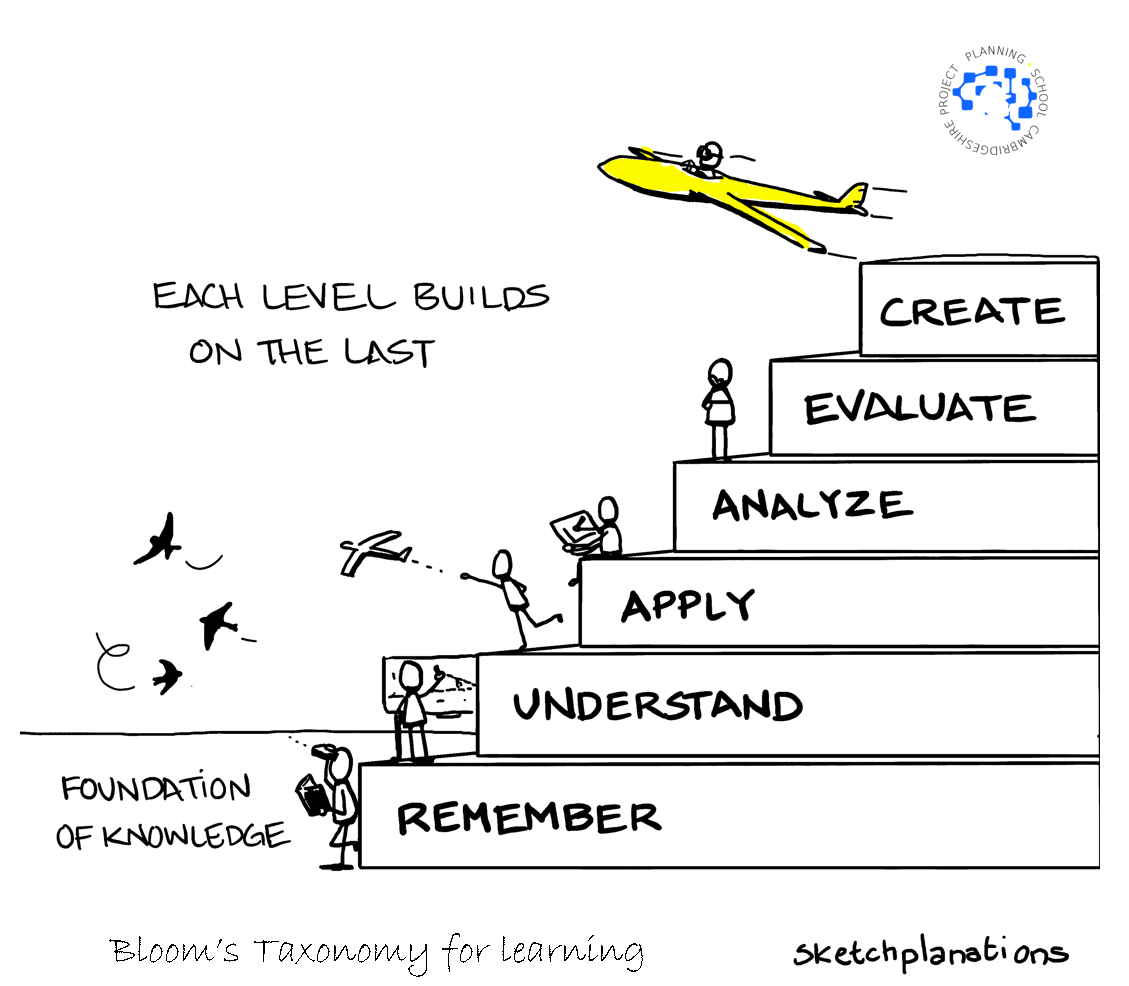
Each competency is assessed against progressive criteria — Knowledge → Understanding → Application → Analysis → Synthesis — so you see your real level, from entry-level skill through to expertise, and exactly where to grow next.
How it works
STEP 1
Register
Create your account and start the assessment.
STEP 2
Answer the questions
Work through the evaluation questions at your own pace.
STEP 3
Processing
Your responses are analysed to identify strengths and gaps.
STEP 4
Your report
Receive a report with your strengths, areas to improve, and personalised recommendations.
Key features
- Aligned with international standards — designed to reflect the competencies defined by leading project management standards.
- Personalised assessments — tailored to the specific needs of your role, organisation or project.
- Self-evaluation and feedback — self-assess and receive targeted feedback to improve.
- Built on Bloom’s taxonomy — grounded in cognitive psychology and the mechanisms of learning.